A Place at the Table: Gratitude, History, and the Stories We Tell
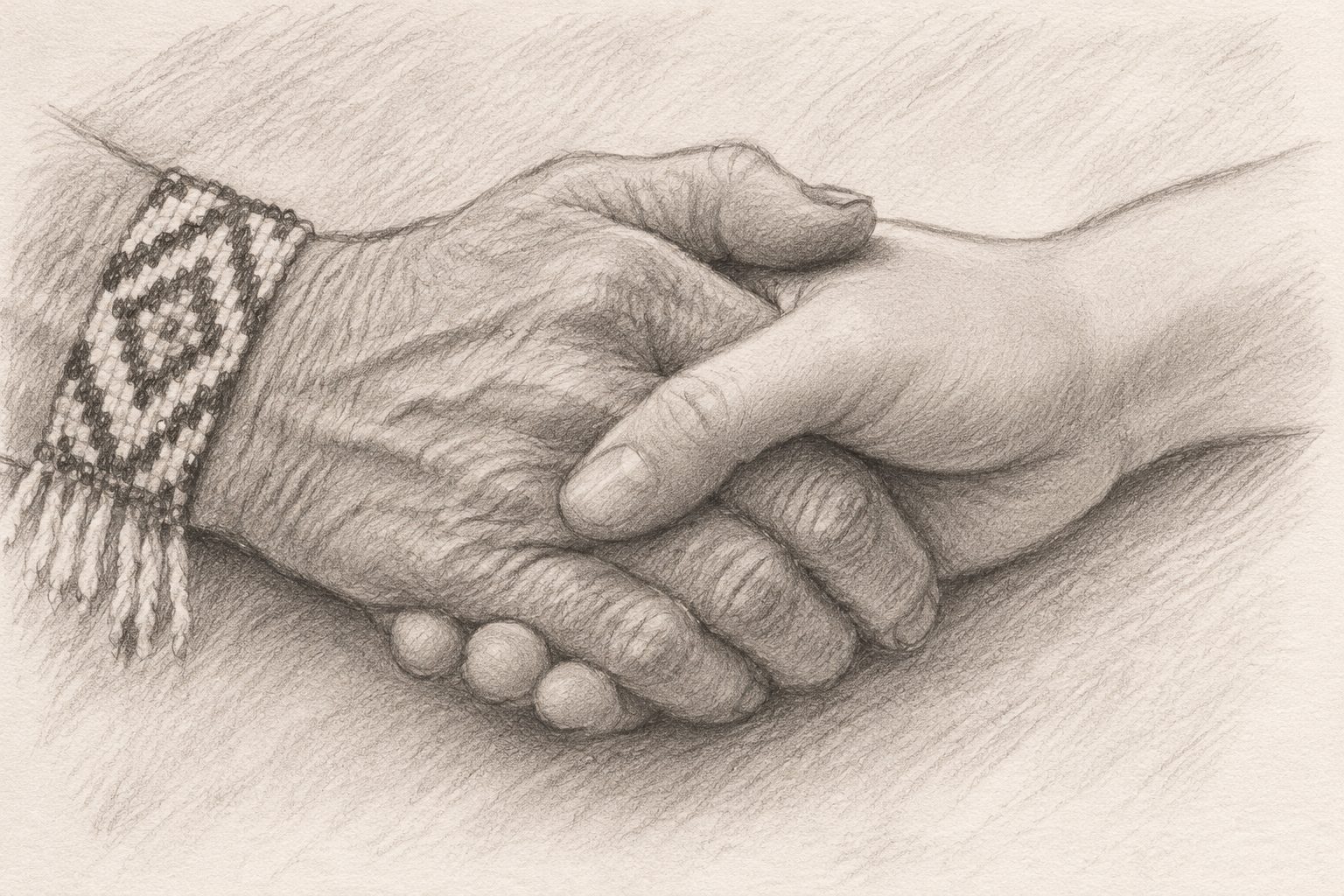
There is something about Thanksgiving that I have always loved. Perhaps it is the familiar aromas drifting from the kitchen, the sound of family arriving, or the conversations that begin around the table and somehow continue long after the dishes have been cleared. I love the gathering, the laughter, the familiar stories, and the simple pleasure of being together.
And I love the idea of setting aside a day to give thanks.
I have so much to be grateful for. My family, dear friends, and a wonderful community of writers and readers who have become such an important part of my life. Through the years, I have learned that some of our greatest blessings aren't things at all. They are the people who show up, who listen, who encourage us, and who make our lives richer simply by being part of them.
But as Thanksgiving approaches, I also find myself thinking about those whose circumstances are very different from my own. Across the world, families are struggling with hunger, war, displacement, and uncertainty. For many, the idea of gathering around a table laden with food is a luxury beyond their reach.
It is a sobering thought, and perhaps one we should consider more often.
Gratitude, at least to me, means more than appreciating what we have. It means recognizing how fortunate we are and remembering that not everyone has been given the same opportunities, comforts, or security.
And lately, I have been thinking about another part of Thanksgiving. The history behind it, and the stories we were taught to believe.
The Thanksgiving Stories of My Childhood
When I was a little girl in elementary school, Thanksgiving meant construction-paper turkeys, Pilgrim hats, and cheerful classroom lessons about the Pilgrims and Native Americans sitting together for a great feast.
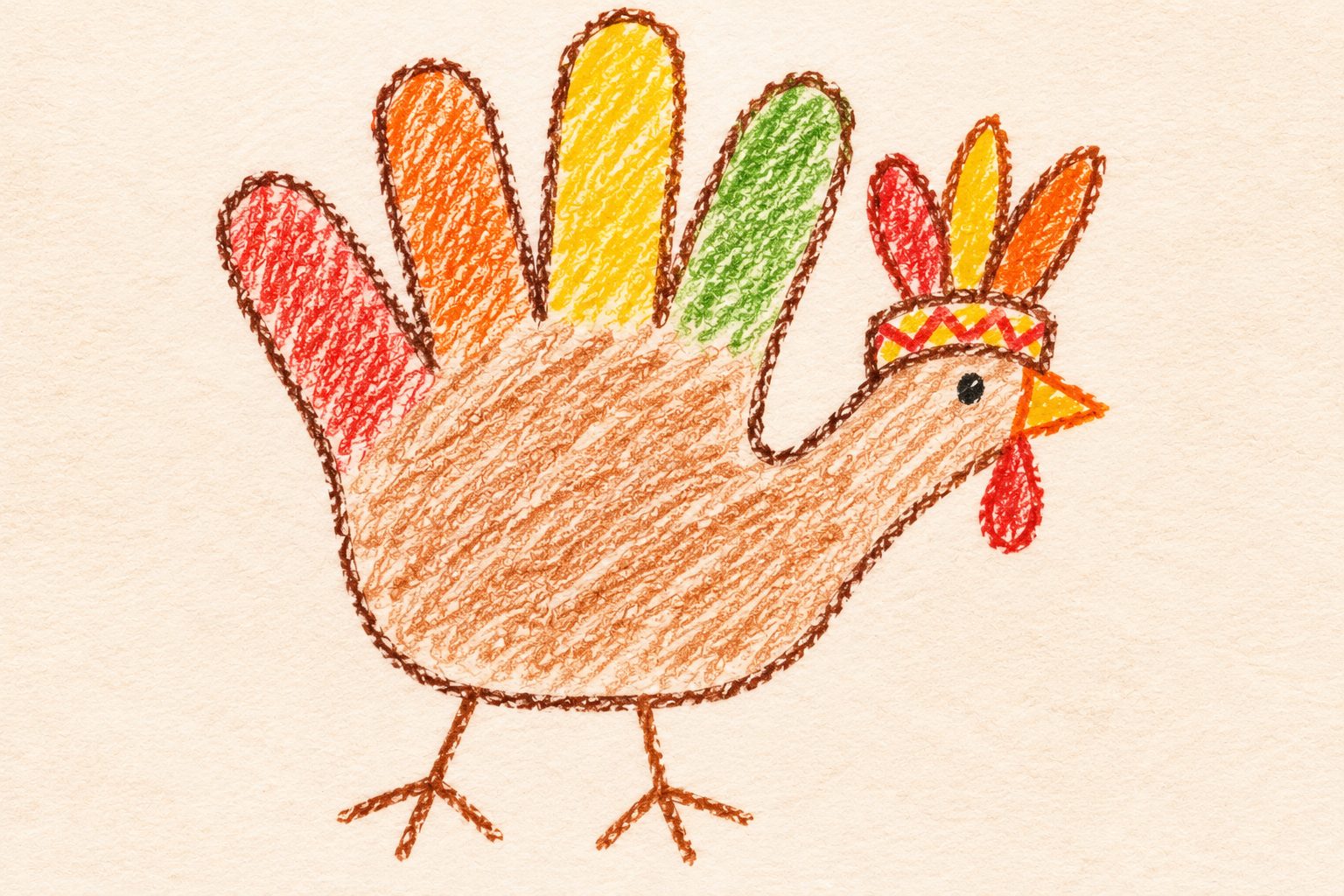
I especially remember tracing our hands on construction paper, turning our fingers into turkey feathers. I always liked to take mine a step further and make the feathers look like a headdress! I suppose even then I had a tendency to add my own creative touches to whatever assignment was placed in front of me.
We colored pictures, made decorations, and learned about friendship and cooperation. It was a lovely story, neatly packaged for young minds, with little room for questions and even less room for the uncomfortable truths that surrounded it.
Looking back now, I realize that even those innocent classroom crafts reflected how little we understood about the people whose history we were supposedly celebrating. We weren't being taught about the richness and diversity of Indigenous cultures. Instead, we were given a handful of familiar images and a simplified story that left far too much unsaid.
But history is rarely so simple.
As I grew older, and particularly during my years as a teacher, I began to understand how incomplete those early lessons had been. The history we were taught was largely presented through the eyes of European settlers. The voices of the Indigenous people who had lived on this land for thousands of years were too often missing.
The Wampanoag people had their own communities, governments, traditions, and deeply rooted relationships with the land long before the Mayflower arrived. Their history did not begin when the Pilgrims stepped ashore, nor did it end with a shared harvest gathering in 1621.
What followed European settlement included disease, the loss of land, warfare, and generations of suffering for Indigenous communities. These are not comfortable parts of our nation's history, but they are essential to understanding it.
And understanding history does not require us to abandon the traditions we love. It asks us to recognize that the stories we inherited were not always the whole story.
A Lesson in Gratitude That Stayed With Me
One of the books I shared with children during my years teaching in a primary classroom was Giving Thanks: A Native American Good Morning Message by Chief Jake Swamp.
It was a beautiful way to introduce young children to a different understanding of gratitude.
The book draws upon the Haudenosaunee Thanksgiving Address, expressing appreciation for the natural world, the earth beneath our feet, the waters, plants, animals, and all the things that sustain life.
What I appreciated most was its simplicity. Gratitude was not something reserved for a particular Thursday in November. It was something to practice every morning, something woven into everyday life.
I often wonder how much better we might care for one another, and for the world around us, if we approached each day with that same awareness.
Children have a wonderful ability to embrace these ideas without the complications adults sometimes bring to them. They are curious, willing to listen, and eager to understand. Perhaps we adults could learn a thing or two from that.
The Stories We Still Need to Hear
November is Native American Heritage Month, making it a particularly meaningful time to explore the histories and experiences of Indigenous peoples.
As a writer, I spend a great deal of time thinking about whose stories are told, whose voices are heard, and whose experiences are left out. Historical fiction, especially, has taught me that the past is never made up of a single perspective.
The same is true of our nation's history.
We cannot undo what happened centuries ago, but we can choose to become better informed. We can listen to Indigenous writers, historians, and poets. We can question the simplified versions of history we learned as children and encourage the next generation to approach the past with curiosity and compassion.
For those who might like to read a little more, I would recommend three books that offer valuable perspectives:
This Land Is Their Land: The Wampanoag Indians, Plymouth Colony, and the Troubled History of Thanksgiving by David J. Silverman.
A carefully researched account that places the Wampanoag people at the center of a history too often told primarily through the experiences of the English settlers.
When the Light of the World Was Subdued, Our Songs Came Through: A Norton Anthology of Native Nations Poetry, edited by Joy Harjo.
A remarkable collection of poetry from Indigenous writers across generations. It is a reminder that history is not only found in textbooks but also in the words, memories, and creative voices of the people who have lived it.
Keepunumuk: Weeâchumun's Thanksgiving Story by Danielle Greendeer, Anthony Perry, and Alexis Bunten, illustrated by Garry Meeches Sr.
A beautifully told children's book that presents the Thanksgiving story through a Wampanoag perspective.
Books invite us to see beyond our own experiences, and sometimes they gently challenge beliefs we have carried for years.
There Is Still Room at the Table
None of these reflections changes how much I love Thanksgiving.
I will still enjoy preparing a meal, gathering with family and friends, hearing the familiar stories, and watching everyone settle into that comfortable rhythm that comes when people who care about one another are together.
I will be grateful for the people sitting around the table, and I will remember those who are no longer there.
I will think, too, of my writing community, the friendships that have grown through a shared love of words, the encouragement offered so generously, and the wonderful people who remind me why storytelling matters.
But I will also remember that Thanksgiving holds different meanings for different people. For some Indigenous Americans, the holiday is a time of mourning and remembrance rather than celebration. Their experiences and perspectives deserve to be heard and respected.
There is room for both gratitude and reflection.
We can celebrate the blessings in our own lives while acknowledging the painful chapters of our shared history. We can cherish our family traditions while being willing to learn something new. And we can teach our children that understanding the past means listening to more than one voice.
This is what I wish most for Thanksgiving.
Not a perfect table, a flawless meal, or even a day without the occasional family disagreement. Heaven knows, that might be asking a bit much!
Just a gathering filled with kindness, gratitude, and the recognition that we have much to be thankful for, and much still to learn.
And somewhere between carving the turkey, passing the potatoes and reaching for that second slice of pie, we could remember that the most meaningful thing we bring to the table is not what we've cooked, but the compassion and understanding we offer one another.
“May the warm winds of heaven blow softly upon your house. May the Great Spirit bless all who enter there. May your moccasins make happy tracks in many snows, and may the rainbow always touch your shoulder.” – Cherokee Blessing
Happy Thankful Day!
Lynda
Lynda