When is a Manuscript Really Finished?
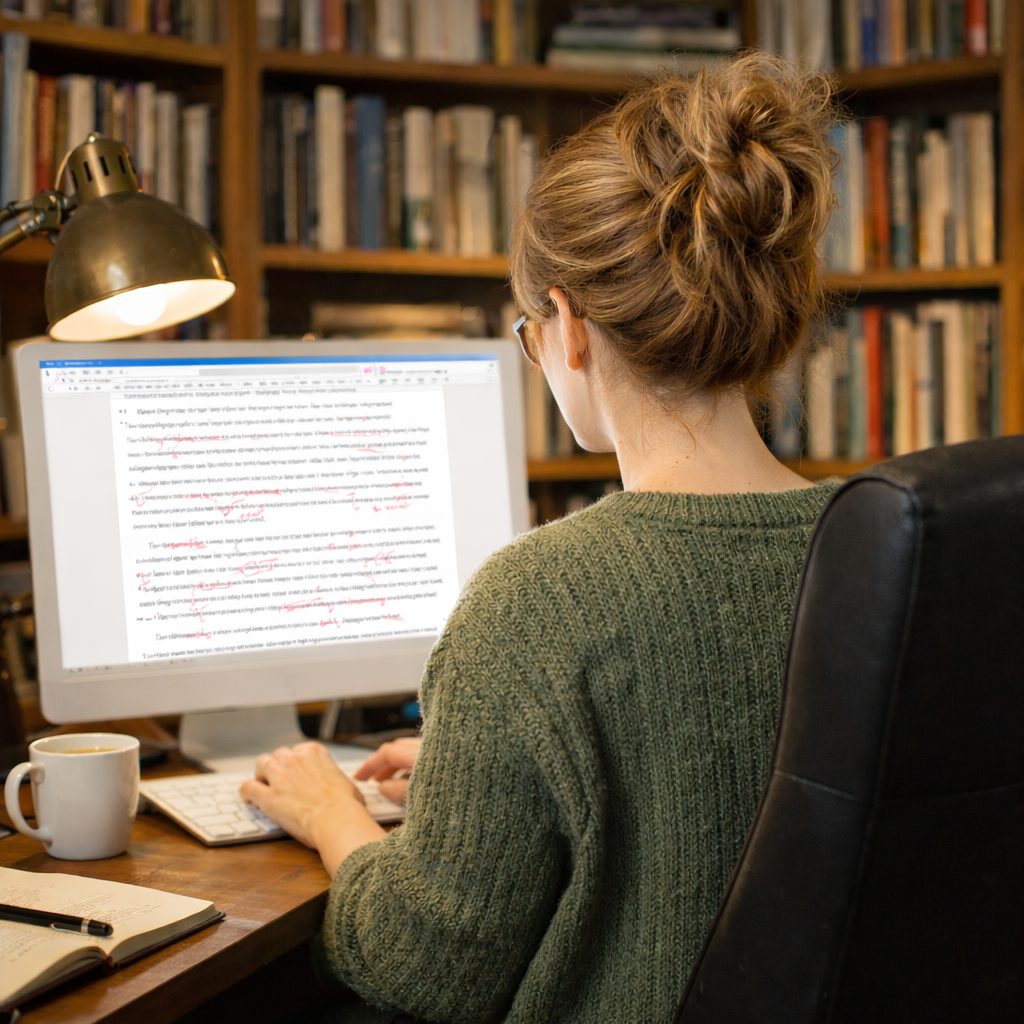
The writer's journey through revision, perfectionism, and learning to let go.
After months of writing, researching, revising, and then revising some more, my latest historical novel, Fooled by a Woman's Smile, is approaching another important stage in its journey toward publication. I've finally chosen an editor, and if all goes according to plan, the manuscript will be in her hands by the beginning of November.
You would think that after publishing fourteen novels, I might have this process figured out by now.
Apparently not.
There is something about preparing a manuscript for another person's critical eye that makes even an experienced writer question decisions that seemed perfectly reasonable a week earlier. Was that chapter necessary? Did I spend too much time describing the countryside? Have I given readers enough reason to care about a particular character? And why, after reading the same paragraph twenty times, have I suddenly decided that it needs rewriting?
Welcome to the wonderful world of perfectionism.
I've always appreciated Anne Lamott's approach to writing in Bird by Bird. She understands something that writers sometimes forget: good writing rarely arrives on the page fully formed. It takes patience, persistence, and a willingness to accept that the first attempt, and sometimes the fifth, may not be particularly wonderful.
There is comfort in knowing that even accomplished writers wrestle with the same doubts.
My current novel has been a particularly interesting journey. Set in 1925 New England, it follows a woman whose circumstances lead her into the dangerous business of Prohibition-era rum-running. What began with the discovery of a woman's journals grew into a story that required considerable historical research, including a trip to Vermont to walk the roads and visit the places where my characters once lived.
Somewhere along the way, these people became rather familiar companions.
I've spent so much time with them that I sometimes forget readers will be meeting them for the first time. I know their histories, their motivations, and the little details of their lives that may never find their way onto the page. But knowing my characters so well doesn't necessarily mean I've told their story as effectively as I could.
And that is where another set of eyes becomes invaluable.
Over the past several weeks, I've been working with beta readers, considering their observations, and taking a hard look at the manuscript's structure. I've also spent a surprising amount of time searching for the right editor.
Choosing an editor isn't simply a matter of finding someone who knows grammar or can suggest a better sentence. At this stage, I'm looking for someone who can step back and examine the story as a whole. Does the pacing hold? Are there places where the narrative wanders? Have I repeated something the reader already understands? Do the characters change and grow in ways that feel believable?
Those are not always comfortable questions.
And I suspect the answers won't always be comfortable either.
But I've come to understand that being open to criticism doesn't mean surrendering my voice as a writer. It means being willing to consider what another experienced reader sees that I may have overlooked.
Of course, knowing this doesn't prevent me from wanting to make just one more change before sending the manuscript along.
That's the trouble with perfectionism. It can disguise itself as diligence. We tell ourselves we're being careful, thorough, and responsible. Sometimes we are. But sometimes we're simply reluctant to let go of something we've spent so much time creating.
I have caught myself rereading a chapter and making a small adjustment, only to return a few days later and change it back. At some point, I have to wonder whether I'm improving the writing or merely rearranging the furniture.
There's also something humbling about the realization that no matter how many books you've written, you haven't finished learning how to write one.
Each novel brings its own difficulties. Some stories unfold with surprising ease, while others demand more patience than we imagined we possessed. Historical fiction adds another layer of responsibility. I want readers to experience the atmosphere of another time without feeling as though they've wandered into a history lecture. I want the details to be accurate, but I also want the people who inhabit that world to feel alive.
Finding that balance has been one of the greatest challenges of this particular manuscript.
As November approaches, I'm trying to remind myself that sending my novel to an editor is not an admission that I haven't done my job well enough. It's another part of doing the job properly.
There will undoubtedly be suggestions that make me nod in immediate agreement. Others may require a long walk, a cup of coffee, and a little time before I can appreciate their value. And there may be recommendations I decide not to follow. After all, the responsibility for the finished story remains mine.
What matters is being willing to listen.
I don't expect perfection when this novel is published. I hope for something much more meaningful: a story that draws readers into another time, introduces them to a woman they won't soon forget, and leaves them feeling that the hours spent reading were worthwhile.
Perhaps that is the standard I've been searching for all along.
So, for now, I'm working toward that early November deadline. There are still pages to review and decisions to make. My editor will soon have the opportunity to tell me what she sees in a manuscript I've been looking at for a very long time.
Am I excited? Absolutely.
A little apprehensive? Of course.
Will I be tempted to make one more revision before sending it?
I think we all know the answer to that.
But somewhere between the first uncertain pages and the final manuscript, a writer has to learn when to loosen her grip and trust the process.
And perhaps that's what this stage of my writing journey is really teaching me.
Not how to write a perfect book, but how to recognize when it's time to let someone else help me make it the best book it can be.
Warmly,
Lynda
I have hated the words and I have loved them. and I hope I've made them right.
, Liesel, The Book Thief
Lynda